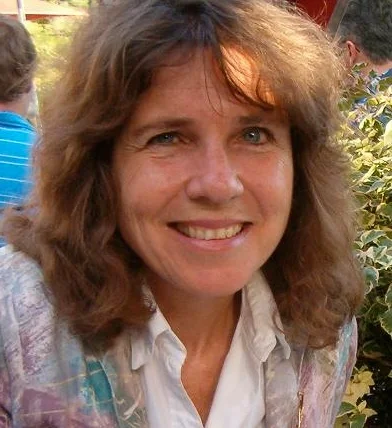
About Dr. Liefland
With a vibrant appreciation for human vitality and connection, Lauren Liefland offers an exciting contribution and revitalization to the field of Psychotherapy, integrating the whole amazing orchestra
of our dynamic mental and physical system.
This vibrant cellular communication
includes the Arts, Learning and Creativity
and its positive effects on mental and physical health -
for individual and community vitality,
indeed for HUMAN SURVIVAL.
Clinical Psychologist · Author Artist/Composer/Songwriter
With over thirty years in the field and some fifteen thousand patients seen as a clinician, Lauren Liefland found that the standardized psychotherapy models, as well-intentioned as they are, did not fit crucial individual variations. They did not adequately encompass the biologically complex and psychologically compelling qualities of a human being or their circumstances. Being curious and creative she realized early on in doctoral fellowships, county hospitals and community clinics that if we focus too narrowly on cookie-cutter techniques, quantified group cohorts, insurance protocols and fragmented services, we lose the human story and leave out essential elements.
These unique combinations make for a much more enlightened understanding of how our mind-body system works (and plays)! It leaves out an appreciation of individual differences that stand out with compelling urgency to be heard and recognized. Our human system is like a symphony with divergent interactive cellular signals communicating like an orchestra with different instruments playing together. It must not be divided up into cold mechanical toolboxes that ruin the dynamic interplay and squash the sound of the music by putting everyone in that same routine or compartments of "care" that may not be really care at all... Those programs can be rigid, and blind to the overlapping interplay of art and science that makes us tick, diversified and inventive to foster better pathways and decisions.
Our system sometimes needs the good conductor that each of us can be... or at least an evolved, enlightened conductor who isn't dangerous to the vitality of the system. The system is remarkably resilient and sensitive. It can adapt and restore balance, recreate neuron cells and sensory pathways. This human system can light up with activating hormones and neuropeptides like dopamine and endorphins, opiates, and adrenaline for mental and physical energy, just from attending a beautiful musical performance or watching a dramatic movie! Engagement in creative activities can elicit joy, form lasting memories, redirect negative thoughts and foster resilience to counter traumatic events.
With real care, and love, in time. these affronts can be overridden with positive, life-affirming, meaningful outlets or courses of action. With courage and support, the medical and emotional components of a person's life can be more fully addressed and appreciated, in a way that reflects the reality rather than imposing another model upon it from a mosaic of disjointed pieces rather than a connected program. We can always employ the specialists but start by understanding the issues at play, with humility and grace, and the skills to make a difference.
That conviction of the real need for an integrated approach to treatment and wellbeing became a foundational revamping of the psychotherapy models into one that could be much more flexible and incorporate essential principles. Symphony of Cells: Integrated Therapy & the Power of Culture, shapes how a true integrative therapist sits with every person who comes to see her or him for a more singular experience and rewarding exploration. Like using a better lens and a clearer map, there are solid guideposts to strengthening and renewing the natural pathways that make up the dimensions of a meaningful human life. These are beyond concrete biochemistry measurements that can be understood by computers for specific targeted treatment advances, but leave out the ideas and emotions of human mind and spirit that cannot be reduced to mechanical algorithms without destroying its human essence.
An integrated psychotherapy embraces components both physical and intangible like music and cultural creativity, to make a positive difference and stimulate mind and body for a renewed energy or more hopeful tomorrow. That is what Integrated Therapy represents and why it is a different philosophy from one that accepts a more prepackaged formula.
Early in Dr. Liefland's career, as a postdoctoral fellow in Behavioral Medicine, the emphasis was on quantifiable methods — and with that, the submerging of individual story or cultural influences as distractions from pure scientific quantifiable outcomes with replicable data, probability coefficients and large group cohorts.. When Dr Liefland suggested that emotionally traumatized children could later in life be diagnosed with bipolar mood disorder, that the repetition of trauma could shape their neurological "wiring," or connections within the limbic system for arousal, the supervisor scoffed: "What do you want to do, dissect the brains of children?" Of course not, no, was the polite answer, "we could see elevated stress cortisol levels in their saliva." Now, today, voila! We can see that this is indeed the case, we can see the effects of emotions and thoughts in brain scans, however primitive our current technology. We can appreciate the power of thought, emotions, and reactions to the world around us. We can embrace the importance of ethical values, the sanctity of life, the vital effects of the arts on the human pysche, and the exquisite, creative neurobiology of experience.
Cultural life is a potent healing force, the essence of our humanity. It is intuitively obvious yet scientifically fresh and advanced in this approach to learning, human health and recovery to grasp the impact of culture, of literature, of music, of the arts, and appreciation of natural harmony, on our brain function.
To ignore culture’s potential as a therapeutic tool would be a dangerous oversight. Yet this is precisely what has been done by professional healthcare organizations that separate cultural engagement from therapeutic interventions, creativity from treatment, sidelining the inspiration so essential for mental health and human survival!
The conductor
The Conductor may be the therapist. The Conductor is You. It is Me. The conductor is also the one seeking support or the patient. The conductor is every human being, gardener, farmer, singer, student, child, teacher, film-director, choirmaster or journalist.
It is a far better metaphor for a good psychotherapist too — one who has knowledge and experience with a multitude of modalities that best fit the problem and best suit the solution. It cannot be imposed from a template. The neurotransmitters are produced from within the human frame, within the system that has the infinite variety of instruments to make the music. It is interconnected with all the parts of our internal body, and with all the elements around us, including the natural world and our planet. It is exquisitely sensitive and creative. And as human beings, we thrive on culture and creativity, including the power of music and the arts to enrich our lives beyond the pragmatic necessities and measurable boxes. so let us explore a richer Psychology that embraces all the elements for a fulfilling and resilient life in spite of challenges and shadows, to shine a light on that interconnected orchestra of life forces for good, for repair, for hope.
Lauren Liefland, Licensed Clinical Psychologist
Ph.D. (United States International University, San Diego, 1992); Postdoctoral Fellowship in Behavioral Medicine (St. Louis University School of Medicine, Division of Behavioral Medicine, 1994); M.A., International Relations (Schiller International University, Paris); Graduate studies: International Law (Certificate with distinction and merit with Dr. Clive Schmitthoff, London Polytechnic Law School); Graduate School of Public Administration (New York University)
“The meeting of science and the human spirit, of cultures and creative expression, opens new possibilities for healing and for a more compassionate world.”
Lauren E. Liefland, PhD
- People
- Cultures
- Ideas
- Creativity
- A Healthier Future